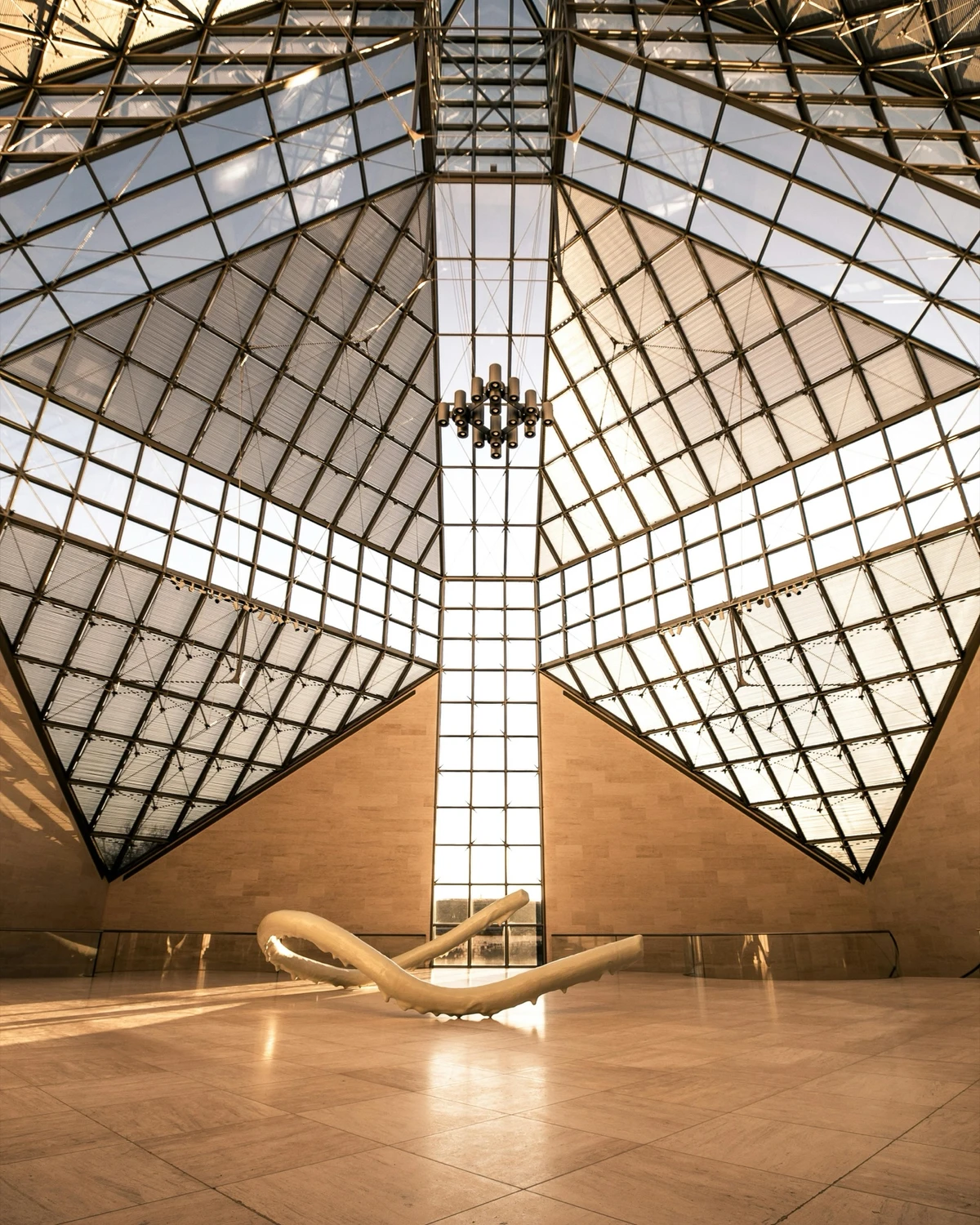
Art leasing is gaining traction among Luxembourg companies as a smart alternative to purchasing artwork outright. Whether the entity is a SARL, an SA or a SAS, the mechanism allows a business to rent paintings, photographs or sculptures to enhance its professional premises while benefiting from a favourable accounting and tax framework.
The concept is straightforward: a leasing company or gallery acquires the artwork and makes it available to the lessee under a rental contract. The tax outcome depends on economic ownership. If the lessee is not the fiscal owner, rental payments may be deductible when they have a direct link to the business. If the lessee is the fiscal owner, the contract is split between debt, interest and any depreciation supported by the asset’s useful life. An acquired artwork with no predictable useful life is generally non-depreciable, but that conclusion remains fact-specific.
The choice between an operating lease (simple rental, no purchase option, regular rotation of works) and a finance lease (hire-purchase with a purchase option at residual value) determines the accounting treatment, balance sheet presentation and end-of-contract outcome. Operating leases suit companies seeking aesthetic flexibility; finance leases suit those building a lasting art collection.
This guide covers the contractual mechanism, accounting treatment under both Lux GAAP (PCN) and IFRS 16, tax deductibility conditions and the critical pitfalls that can trigger requalification by the Luxembourg tax authorities.
The art leasing mechanism
How it works
Art leasing is structured around a tripartite contract between the lessee (the company), the lessor (the leasing company or gallery) and the artist or original owner of the artwork. The lessor acquires the work and rents it to the company in exchange for periodic payments.
| Parameter | Typical values |
|---|---|
| Contract duration | 13 to 60 months |
| Monthly payments | 1.5 % to 3 % of the artwork’s value |
| Residual value (finance lease) | 5 % to 15 % of the initial price |
| Increased first payments | Common (10 % to 20 % at signing) |
| Insurance | Borne by the lessee throughout the term |
Evidence of business use
The general tax rule requires a direct economic link between expenditure and the business. For an artwork, genuine display on business premises and accessibility to employees or visitors is useful evidence — for example in a reception, meeting room or professional office. Display alone does not guarantee deductibility.
Installation in a manager’s private residence, even if partially used for business purposes, may trigger requalification as a taxable benefit in kind. The reality of the display can be verified through documentary checks such as photographs and floor plans in the event of an audit.
Accounting treatment
Under Luxembourg GAAP (PCN)
The Luxembourg chart of accounts does not contain a specific art-leasing model. Under the classic patrimonial approach, presentation follows legal ownership. A company electing the substance-over-form option under Article 29(3) LRCS may instead apply a recognised framework, such as IFRS 16, consistently to an entire class of contracts.
| Lease type | Balance sheet position | Recording of payments |
|---|---|---|
| Operating | Artwork does not appear on the lessee’s balance sheet | Operating expenses (general expenses, decoration and fit-out) |
| Contract accounted for by substance | Right-of-use asset or other asset and a liability under the selected framework | Depreciation and interest under that framework |
The substance-over-form election is a durable accounting policy. It must cover the relevant contract category, be applied faithfully and be disclosed in the notes. Fiscal ownership remains a separate tax analysis.
Under IFRS 16
Since 2019, IFRS 16 requires virtually all lease contracts to be recognised on the lessee’s balance sheet, including operating leases, whenever the term exceeds 12 months. The lessee must recognise:
- A right-of-use asset on the asset side
- A lease liability on the liability side
In practice, the vast majority of Luxembourg SMEs apply the PCN rather than IFRS. IFRS 16 applies primarily to listed companies and large groups consolidating under international standards.
Operating lease versus finance lease
| Criterion | Operating lease | Finance lease (hire-purchase) |
|---|---|---|
| Ownership at end of term | No — artwork returned to lessor | Possible if purchase option exercised |
| Classic Lux GAAP presentation | Rental expense | Depends on legal ownership and any substance-over-form election |
| Tax deduction | Rent if the lessor remains fiscal owner | Potential depreciation and interest if the lessee is fiscal owner |
| Purchase option | No | Yes, at the agreed residual value |
| Risks and rewards | Remain with the lessor | Transferred to the lessee |
| Typical profile | Company wanting to rotate its collection | Company wanting to acquire the artwork |
Operating leases are often preferred for art because of their accounting simplicity and the ability to refresh the collection regularly. Finance leases are better suited to companies seeking to build a lasting art portfolio.
Luxembourg tax treatment
Rental deductibility
Rental payments may be deductible if the lessee is not the fiscal owner and the following points are documented:
| Condition | Detail |
|---|---|
| Professional display | The artwork must be installed in the company’s business premises |
| Exclusive business use | No private use by the manager or shareholders |
| Proportionality | Payments must not be disproportionate relative to turnover |
| Documentation | Lease contract, invoices, photographs of the display |
| Fiscal ownership | Analysis of risks, benefits, purchase option and economic control |
The tax effect depends on taxable profit, municipality and the company’s own position. A deductible expense should not be presented as a guaranteed saving or separated from the contract’s economic cost.
VAT on lease payments
Lease payments are subject to VAT at the standard rate of 17 %. VAT is recoverable by the lessee provided it is a taxable person using the artwork in the course of its business activity.
Watch points and audit risks
Non-essential expenditure calls for particularly strong documentation. Several risks must be anticipated:
- Requalification as a benefit in kind: If the purchase option is exercised personally by a manager at a discounted price, the difference between the contractual residual value and market value may be requalified as a taxable benefit in kind (art. 6 StAnpG).
- Disproportionate amounts: Excessive payments relative to the company’s activity or turnover may be challenged.
- Missing documentation: Inability to prove professional display of the artwork weakens the deductibility claim.
Lease contracts, monthly invoices, dated photographs of the artwork on the premises and insurance certificates should be retained systematically. This documentation is the strongest protection in the event of a tax audit.
End-of-contract outcomes
Operating lease at maturity
At contract maturity, the artwork is returned to the lessor. A new contract for a different work requires a fresh assessment of business purpose and tax treatment.
Finance lease and purchase option
The company may hold a purchase option at a contractually agreed residual value. If exercised, the artwork is recognised as a tangible fixed asset. Depreciation then requires evidence of a predictable decline over a useful life. Without that evidence, the asset is generally non-depreciable, although a justified impairment may still be relevant.
Buyback by a manager or shareholder in a personal capacity at below market value may trigger tax requalification. The transfer price should therefore be supported by independent market-value evidence.
Advantages and limitations
| Advantages | Limitations |
|---|---|
| Staggered cash flow and a possible deduction depending on fiscal ownership | Business link and absence of private use must be demonstrated |
| Off-balance-sheet presentation may apply under the classic patrimonial model | Different treatment if substance-over-form is elected |
| Cash-flow flexibility (no upfront capital outlay) | Classification and market value must be documented |
| Regular rotation of artworks | Possible fluctuation in artistic value |
| Brand image and cultural engagement | Insurance obligation throughout the lease |
Official sources
Related service
Turn this topic into action
If this topic has a direct impact on your business, explore our Luxembourg accounting support to document accounting treatment, deductibility and recurring entries for leased assets.
Explore accounting supportFrequently Asked Questions
Is art leasing reserved for large companies?
No. Any Luxembourg company can enter into an art leasing contract, regardless of size or legal form. Contracts are available for works starting from a few thousand euros, with adapted monthly payments.
Can the artwork be installed in a coworking space?
Yes, provided the space is identified as a business premise of the lessee company. If shared with other companies, documentation must clearly establish the link between the artwork and the lessee's business activity.
What happens if the artwork is damaged during the contract?
The lessee is generally responsible for insuring the artwork throughout the lease. The contract specifies indemnification terms in case of damage, theft or destruction. Insurance covers replacement value or residual value depending on the agreed terms.
Is digital art leasing (NFTs) treated the same way?
No automatic treatment should be assumed. The asset, the rights actually leased, business use and valuation must be analysed case by case. The absence of specific administrative practice calls for stronger documentation.
Can a company hold multiple art leasing contracts simultaneously?
Yes. Many companies build a collection by subscribing to several simultaneous contracts with staggered maturities, allowing gradual renewal of artworks. Each contract receives independent accounting and tax treatment.